

Setting clear expectations
So maybe it’s worth stating it clearly: there are certain things we, as interpreters, simply cannot do. Not because we lack the skills or the willingness, but because our role has very specific boundaries. Understanding those boundaries is exactly what allows us to deliver high-quality work.
We cannot fix unclear speech
When speakers are vague, disorganised, or unprepared, we cannot turn that into a perfectly structured message. Of course, there are moments when we pause, listen carefully, and find ways to follow the train of thought and link ideas so the message flows as well as possible. But if the speech itself and the underlying thinking are unstructured, that will inevitably come through. We interpret what is said—not what should have been said.
We cannot fix the sound
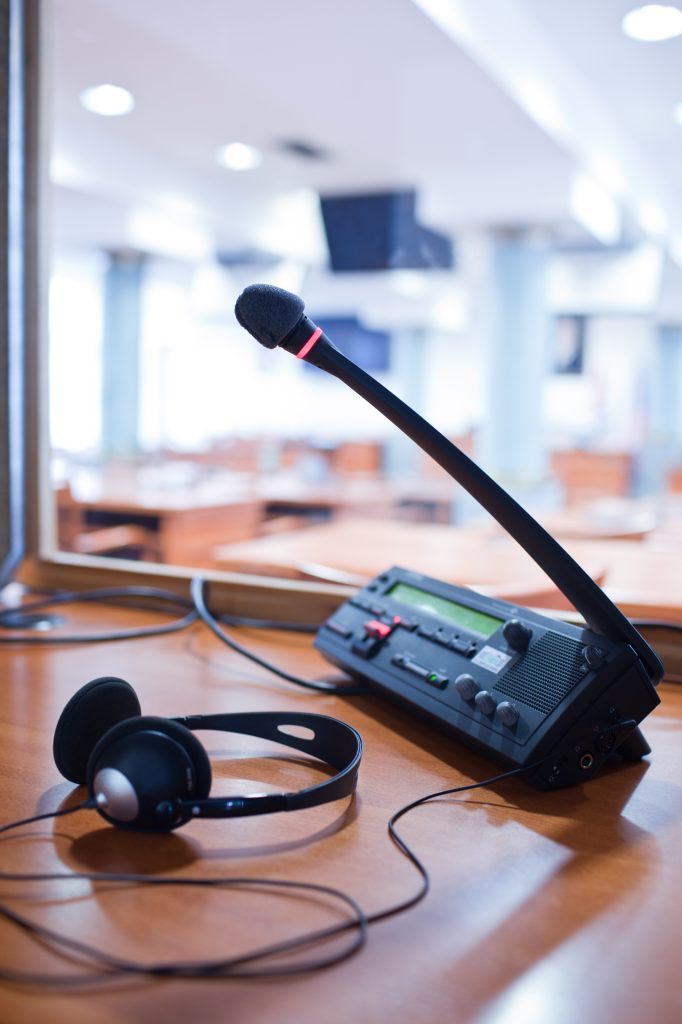
In the booth, everything depends on the quality of the audio. If the sound is distorted, unstable, or poorly managed, it directly affects the interpretation. We do not control the console, the microphones, or the technical setup. That is why professional technical support is not a luxury—it is essential. Without good sound, even the best interpreter cannot deliver quality.
We cannot work without proper input
nterpretation does not happen in isolation. We need context, preparation materials, and a clear understanding of the topic. When we receive incomplete or last-minute information, the cognitive load increases and the risk of inaccuracies grows. Of course, we will still deliver a good result—but having access to materials allows us to perform at the level our clients expect.
We cannot replace communication strategy
If a meeting lacks structure or a message has not been properly developed, interpretation cannot fix that. We do not design communication—we carry it across languages. A well-prepared message will always travel better.
Interpreting is often described as a bridge—and that is exactly what it is. But even the strongest bridge depends on what stands on either side. When expectations are realistic and the conditions are right, communication flows naturally.
Because good interpreting starts long before the booth — it starts with preparation, clarity, and realistic communication.